.

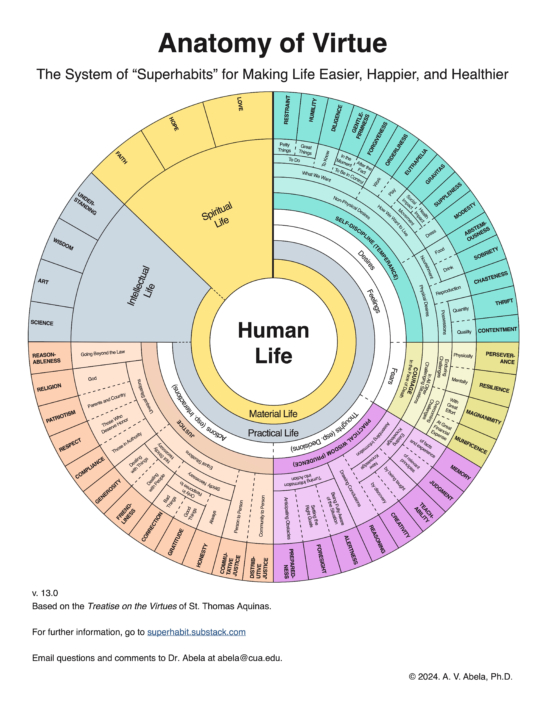
And by a prudent flight and cunning save A life which valour could not, from the grave. A better buckler I can soon regain, But who can get another life again? Archilochus

Friday, April 3, 2026

Violating the Speed of Light: Infinities beyond the Limit of Causality (Light) inside of the Dirac Sea...?

Michelle Starr, "Physicists Found Something That Can Move Faster Than Light: The Darkness Inside It"

For the first time, physicists have observed that 'holes' in light can move faster than the light itself.

They're known as phase singularities or optical vortices, and since the 1970s, scientists have predicted that, just as eddies in a river can move faster than the flowing water around them, so too can whirlpools in a wave of light outrun the light they're embedded within.

This does not break relativity, which states that nothing can travel faster than the speed of light. That's because the vortices carry no mass, energy, or information, and their motion is based on the evolving geometry of the wave pattern rather than any physical motion through space.

However, capturing this phenomenon in action has been difficult to accomplish because it unfolds on extremely small scales of space and time. The achievement is a triumph of electron microscopy.

"Our discovery reveals universal laws of nature shared by all types of waves, from sound waves and fluid flows to complex systems such as superconductors," says Ido Kaminer, physicist at the Technion Israel Institute of Technology.

"This breakthrough provides us with a powerful technological tool: the ability to map the motion of delicate nanoscale phenomena in materials, revealed through a new method (electron interferometry) that enhances image sharpness."

Although to our eyes light appears uniform, it has a lot going on that we cannot easily discern. Light can be subject to disturbances similar to those seen in other systems dominated by flow dynamics, including a type of phase singularity scientists call optical vortices.

Light can behave both as a particle and a wave; an optical vortex forms when the wave twists as it travels, like a corkscrew. At the very center of that twist, the light cancels itself out, leaving a point of zero intensity – a kind of dark "hole" in the light.

It's mathematically understood that two singularities in a reference frame will be drawn together, gaining speed as they approach, reaching velocities that appear to exceed the speed of light in a vacuum.

"As opposite-charged singularities approach each other, their paths in spacetime must form a continuous curve at the annihilation point, forcing their acceleration to unbounded velocities right before the annihilation," the researchers explain in their paper.

It has been observed in other systems, but studying how this scenario might play out in a light field is somewhat trickier. Much work has been done in physics labs to study it, but observations of optical vortices have been limited by the technology's inability to keep up with the speed at which vortex formation, motion, and collision unfold.

To overcome these limitations, Kaminer and his colleagues recorded the behavior of optical vortices in a two-dimensional material called hexagonal boron nitride.

This material supports unusual light waves called phonon polaritons – hybrids of light and atomic vibrations – that move much more slowly than light alone and can be tightly confined. This creates intricate interference patterns filled with many vortices, allowing the researchers to track their motion in detail.

The second, crucial part was capturing those dynamics in real time. The team deployed a specialized high-speed electron microscope with unprecedented spatial and temporal resolution, which recorded events unfolding over just 3 quadrillionths of a second.

They ran the experiment many times, each time recording at a slight delay compared to the previous run. By stacking together the hundreds of images generated this way, the researchers created a timelapse of the vortices as they hurtled towards and annihilated each other, their velocities very briefly reaching superluminal speeds in the process.

The experiment took place in a two-dimensional context. The next step, the researchers say, is to try to extend their work into higher dimensions to observe more complicated behavior. They also say the techniques they developed could help address some of the current limitations of electron microscopy.

"We believe these innovative microscopy techniques will enable the study of hidden processes in physics, chemistry, and biology," Kaminer says, "revealing for the first time how nature behaves in its fastest and most elusive moments."

The research has been published in Nature.

Finding Wedges to Drive thru the Cracks in General Relativity...

Goedel Goes Swimming in the Dirac Sea...

Thursday, April 2, 2026

Holy Week Questions?: For Maundy Thursday...

from Google AI:
Maundy Thursday is called "Maundy" because it stems from the Latin word mandatum, meaning "command" or "mandate". This refers to the new commandment Jesus gave his disciples during the Last Supper to "love one another as I have loved you," shortly after washing their feet to symbolize service and humility.

Key details about the name and day
  • The Commandment: In John 13:34, Jesus says, "A new commandment I give to you, that you love one another; as I have loved you...".
  • Latin Roots: This "new commandment" is translated in the Latin Vulgate Bible as Novum Mandatum. Over time, mandatum was anglicized to "maundy".
  • Washing of Feet: The day commemorates the Last Supper, where Jesus washed his disciples' feet to model humble service. This act is known as the Mandatum.
  • Other Names: It is often called Holy Thursday, or in some traditions, "Sheer Thursday" (clean Thursday).
  • Traditions: In the UK, the monarch commemorates this day by distributing special coins known as "Maundy money" to residents.

Wednesday, April 1, 2026

Christianity's 'April' Saturnalia

When the Christian Church Swapped Holidays with Pagan Rome

from Google AI:
Saturnalia was an ancient Roman festival (Dec 17–23) honoring Saturn, characterized by a, intense, temporary inversion of social hierarchy that mirrored a mythical "Golden Age" of equality. Slaves were treated as equals, often served by masters, and allowed to wear the pileus (freedom cap) and act freely.

Key Social Inversions
Role Reversals: Slaves were permitted to eat with masters, speak freely, and were often served by them, effectively flipping the social order. 
Lord of Misrule: A household would choose a Saturnalicius princeps (mock king) by throwing dice to issue ridiculous, absolute commands (e.g., "sing," "dance," "don't wear a toga"). 
Dress Codes: Strict Roman clothing rules were abandoned, allowing slaves to wear the pileus (felt cap) of freedmen and for everyone to wear colorful casual clothes (synthesis) instead of official togas. 
Allowed Vice: Gambling, typically restricted in public, was widely permitted, transforming the city into a scene of wild revelry. 
Legal/Business Pause: Courts were closed, schools closed, and no business was conducted, focusing entirely on dining, drinking, and gift-giving. 
Purpose
This inversion served as a safety valve for society, allowing for "December liberty" to alleviate tensions from rigid social class constraints before reverting to normal, hierarchical life.